
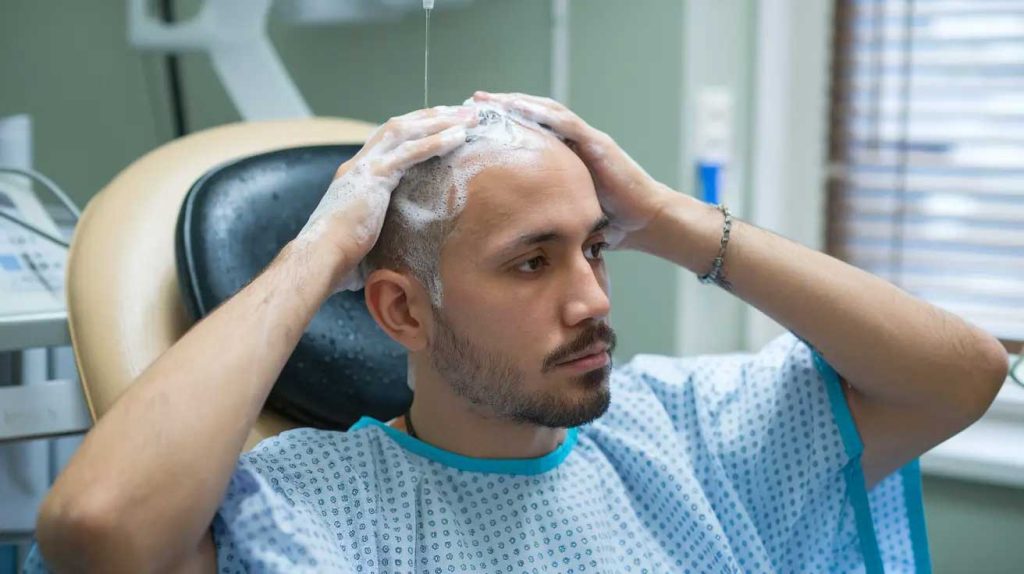
After a hair transplant proper aftercare helps protect grafts and support healing. Gentle hair washing and following specialist instructions reduce the risk of damage and promote healthy hair growth. .
Wait Until Your Specialist Recommends Hair Washing
Hair should not be washed immediately after a hair transplant. The scalp needs time to allow the grafts to settle properly.
The first hair wash usually depends on:
- Healing progress
- Scalp condition
- Transplant technique
- Specialist’s recommendation
Key Points to Know:Washing too early may disturb newly implanted grafts. Always follow the timeline provided by your specialist instead of washing your hair on your own.
Use the Recommended Shampoo
The shampoo used after a hair transplant should be gentle and suitable for sensitive skin. Harsh products may irritate the scalp and slow the healing process.
A suitable shampoo should:
- Clean the scalp gently
- Avoid excessive dryness
- Support healing
- Reduce scalp irritation
Use only the products recommended by your specialist during the recovery period.
Wash Your Hair with Gentle Hands
The safest way to wash your hair is by avoiding pressure on the transplanted area. Instead of rubbing the scalp apply the shampoo gently.
Follow these simple steps:
- Wash your hands before touching your scalp.
- Apply shampoo carefully without rubbing.
- Use light fingertip movements if advised.
- Avoid scratching the scalp.
- Allow the shampoo to rinse naturally.
Gentle handling helps protect newly transplanted follicles during the early healing stage.
Use Lukewarm Water Instead of Hot Water
Water temperature also affects scalp comfort after a hair transplant. Extremely hot or very cold water may increase discomfort during recovery.
Lukewarm water helps:
- Keep the scalp comfortable
- Reduce unnecessary irritation
- Support gentle cleansing
Avoid directing strong water pressure onto the transplanted area.
Dry Your Hair Carefully
Drying your hair is just as important as washing it. Wet grafts remain sensitive during the early recovery period and should be handled with care.
To dry your hair safely:
- Pat the scalp gently with a soft towel.
- Do not rub the transplanted area.
- Allow the hair to air dry whenever possible.
- Avoid using high heat from a hair dryer.
Gentle drying reduces unnecessary friction and supports healthy healing.
Do Not Remove Scabs Forcefully
Small scabs normally develop around transplanted follicles during healing. These scabs protect the grafts and usually fall away naturally.
Avoid:
- Picking scabs
- Scratching the scalp
- Using fingernails
- Applying unnecessary pressure
Removing scabs too early may affect the healing process and increase irritation.
Avoid Common Hair Washing Mistakes After Transplant
Incorrect washing habits can affect scalp recovery after a hair transplant. Many problems occur when patients apply too much pressure or use unsuitable products during the healing period.
Avoid these mistakes:
- Rubbing the scalp harshly
- Using strong shampoos without advice
- Scratching the transplanted area
- Washing with high-pressure water
- Ignoring specialist instructions
Following the correct washing method helps protect grafts and supports better recovery.
Return to Normal Hair Washing Gradually
The recovery timeline is different for every patient. As the scalp heals you can gradually return to your regular hair washing routine according to your specialist’s advice.
Your specialist considers:
- Scalp healing
- Graft stability
- Hair growth progress
- Overall recovery condition
Key Points to Know:Avoid rushing back to normal routines because early care plays an important role in protecting transplanted follicles.
Follow Professional Aftercare Instructions
Aftercare is an important part of achieving successful hair restoration results. Washing your hair properly is only one step of the complete recovery process.
A specialist may guide you about:
- Hair washing schedule
- Suitable hair products
- Scalp care routine
- Activities to avoid during recovery
Following professional instructions reduces complications and supports healthy hair growth.
Before You Decide:Institute Cosmetique provides personalized guidance after hair restoration procedures to help patients follow the right recovery routine according to their scalp condition.
Proper Care Supports Better Hair Recovery
If you are looking for the best hair transplant in Lahore choose a hair transplant clinic that focuses on expert consultation, advanced techniques and complete aftercare support.
A proper recovery plan helps maintain healthy grafts and supports natural-looking results.
Expert Support Helps Maintain Long-Term Results
Every patient has different healing needs after a hair transplant. Regular follow-up appointments allow specialists to monitor progress and provide guidance when needed.
Institute Cosmetique focuses on patient care by providing treatment planning and recovery support based on individual hair conditions.
Professional advice helps patients understand how to care for their scalp during each recovery stage.
The bottom line
Washing hair after a hair transplant requires patience and proper technique. Gentle cleaning, suitable products and following specialist instructions help protect transplanted grafts during recovery.
Avoiding harsh washing methods and maintaining proper aftercare support healthier healing and better long-term hair restoration results.
Frequently Asked Questions
1. When can I wash my hair after a hair transplant?
The timing depends on your recovery progress and your specialist’s instructions. Avoid washing too early without professional guidance.
2. Can I use regular shampoo after a hair transplant?
It is better to use the shampoo recommended by your specialist because regular products may irritate the healing scalp.
3. Can washing damage transplanted hair grafts?
Yes. Applying too much pressure or rubbing the scalp harshly may disturb grafts during the early recovery stage.
4. How should I dry my hair after a hair transplant?
Dry your hair gently by patting it with a soft towel. Avoid rubbing and excessive heat.
5. When can I return to my normal hair washing routine?
Your specialist can guide you based on your scalp healing and graft stability.